
Neck Pain: Causes, Diagnosis, Treatment and Exercise

Neck pain can gradually narrow the ease and freedom of everyday movement. Checking traffic becomes a guarded turn, an afternoon at the computer leaves a persistent ache, and finding a position for sleep becomes a nightly negotiation. When symptoms keep returning, the questions become more pressing: What is causing this? Does degeneration mean lasting damage? Why does treatment provide relief without resolving the problem?
At Kinetic Health, our purpose is to help you restore movement and function so you can return to everyday life with confidence. This begins with understanding your symptoms, identifying findings that influence care, and developing a plan that addresses both your current limitations and the demands you want to meet.
Motion Specific Release (MSR), developed by Dr. Brian Abelson, provides the framework for connecting assessment, manual treatment, exercise, and education. Drawing on decades of clinical practice and professional teaching, this approach considers diverse perspectives while keeping decisions grounded in your findings and goals.

Why Does Neck Pain Develop?
Muscle and Joint Symptoms
Unfamiliar activity, repetitive tasks, prolonged positions, or sudden increases in physical demands may contribute to soreness and restricted movement. Muscles can become fatigued, while irritated joints and protective muscle activity may make turning or looking upward difficult.
Computer work and phone use can aggravate symptoms, but there is no single posture that explains every case. How long you remain in a position, how often you move, and your capacity to tolerate the task are useful considerations.
Injury and Whiplash
Motor vehicle collisions, falls, and sports injuries can affect several structures in the cervical region. Following trauma, neck symptoms may coexist with headache, dizziness, or concussion-related difficulties. Assessment needs to distinguish these possibilities and identify concerns requiring medical investigation.
Age-Related Changes
Disc degeneration and arthritis become more common with age. These findings do not automatically explain pain or determine your capacity to recover. Their relevance depends on whether they correspond with your symptoms and examination.
Rehabilitation can address movement and physical capacity even when age-related structural changes remain.
Nerve Involvement
An irritated or compressed cervical nerve root can cause pain extending into the shoulder, arm, or hand, sometimes with tingling, numbness, or weakness. This is called cervical radiculopathy.
Similar symptoms can arise from peripheral nerves outside the spine. The distribution of symptoms and neurological findings help distinguish the possibilities and guide management.
What Do Your Symptoms Tell Us?
Neck pain may occur with stiffness, shoulder-blade discomfort, or headache. Some headaches arise from cervical structures, but others have different causes and require a broader assessment.
Dizziness also deserves careful evaluation. Inner-ear disorders, neurological conditions, medication effects, and other medical concerns can produce dizziness alongside neck pain. Their coexistence does not establish that the neck is responsible.
The behaviour of symptoms matters: what brings them on, what changes them, and whether they are improving, fluctuating, or becoming more limiting.

Assessment: Connecting Findings With Function
We begin with your history, including symptom onset, previous episodes, injury, general health, and treatment response. We also ask what the problem prevents you from doing. Driving, sustained computer work, lifting, and returning to sport place different demands on the neck.
The examination assesses movement, relevant joints and soft tissues, and surrounding regions when indicated. Arm symptoms may call for testing strength, sensation, and reflexes to investigate nerve involvement.
The value of the examination lies in the overall pattern. A tender muscle or restricted movement may contribute useful information, but neither establishes the diagnosis in isolation. We cannot always identify one exact source of pain; assessment can still establish priorities and guide care.
When the presentation does not fit a straightforward musculoskeletal problem, referral or further investigation takes priority. Diagnosis is also reconsidered when symptoms change or progress falls short of expectations.
Do You Need an X-Ray or MRI?
Imaging should answer a clinical question and help determine what happens next. Many uncomplicated episodes can be assessed initially without a scan, although imaging may be appropriate in selected circumstances.
Significant trauma, progressive neurological changes, suspected spinal cord involvement, or other concerning findings may require investigation. Persistent symptoms can also justify imaging when results would influence management.
An X-ray primarily examines bones; MRI provides more detail about discs, nerves, and the spinal cord. Findings must be interpreted alongside the examination. A report describing degeneration is useful information, but it is not a complete explanation of your pain or future function.
Why We Connect Treatment With Rehabilitation
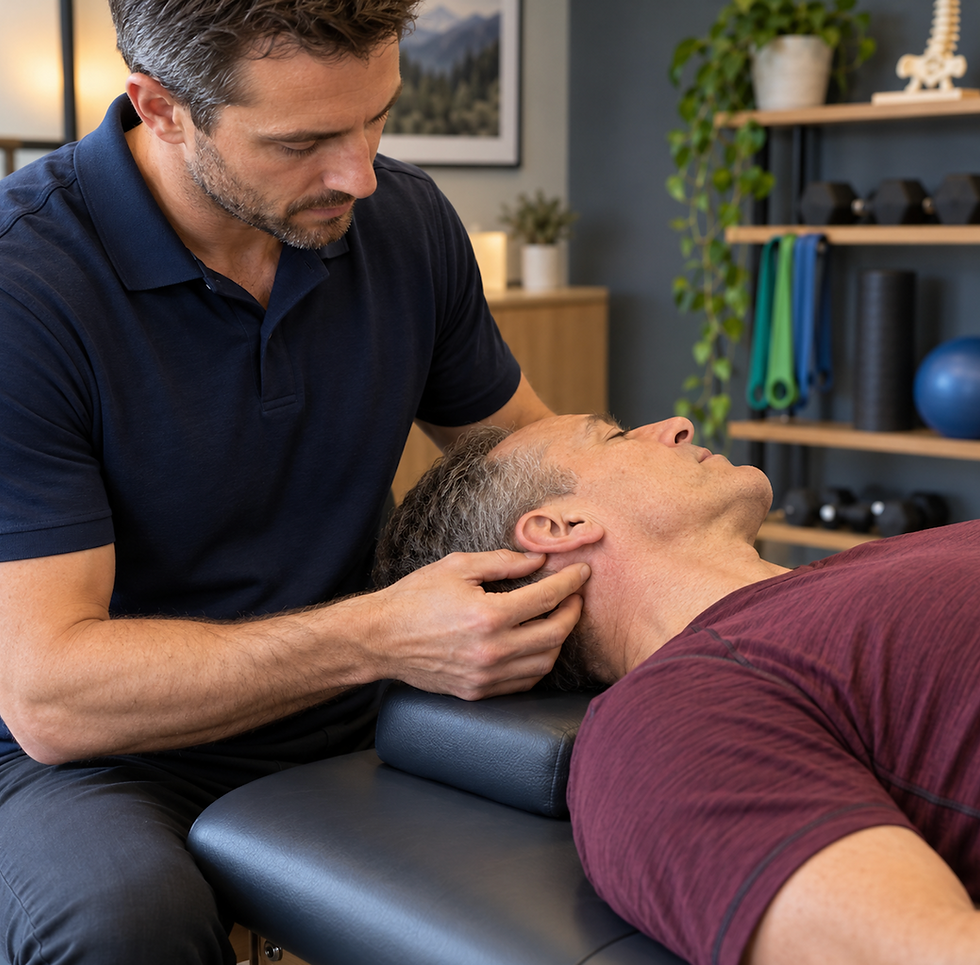
Relief during an appointment matters, but the neck must also tolerate the demands waiting outside the clinic: computer work, lifting, driving, or returning to sport. Treatment and rehabilitation therefore serve related purposes. Manual care may help reduce symptoms or improve movement, while progressive exercise develops the capacity to meet those demands.
At Kinetic Health, MSR brings these decisions together. We examine the painful region alongside relevant shoulder, upper-back, and neurological findings. This broader view helps us investigate contributing relationships without assuming that every finding requires treatment.
Dr. Brian Abelson teaches assessment, manual procedures, and rehabilitation through professional education programs for musculoskeletal practitioners. That work informs an approach centred on applied anatomy, clinical reasoning, and adaptable practical skills.
Precise, Responsive Manual Care
Soft-tissue and joint procedures are selected according to your presentation. Contact, positioning, movement, and force are adapted to the findings, your preferences, and your response. Reassessment helps determine whether a procedure contributes to a relevant change and what should happen next. Treatment response guides decisions rather than guaranteeing a particular outcome.
Why Does Relief Sometimes Fade?
Short-term relief does not necessarily mean that capacity, repeated daily demands, or other contributors have changed. When symptoms return, we reconsider the plan: Is exercise progressing appropriately? Are work demands exceeding current tolerance? Does sleep need attention? Do findings warrant further investigation or collaboration?
Mobilization and Manipulation
Mobilization uses slower, controlled joint movements. Manipulation involves a brief, controlled thrust. Either may be considered for selected patients, according to findings, contraindications, potential benefits and risks, and informed consent.
Cervical manipulation is an option, not a requirement. Your preferences matter, and other approaches can be selected. These techniques are not intended to permanently realign vertebrae or replace active rehabilitation.
Exercise: Rebuilding Capacity
Stretching may help movement, but rehabilitation often needs to develop strength, endurance, and tolerance for daily demands. The appropriate program depends on your symptoms, starting capacity, and goals.
Early exercises may focus on manageable neck and upper-back movement. Progression can include neck and shoulder strengthening, endurance training, and tasks related to work or recreation. General physical activity may also form part of the plan.
Mild, temporary symptoms may be acceptable during some exercises, depending on the assessment. Substantial or progressively worsening pain, new arm symptoms, or weakness calls for modification and reassessment.
Progress should be reflected in what you can do: turn more easily, work with fewer interruptions, lift with greater confidence, or return to an activity you value.
How Long Will Recovery Take?
Timelines vary with the presentation, duration of symptoms, nerve involvement, general health, and demands of daily life. A recent episode and a longstanding problem may follow different courses. Early reassessment should establish whether care is producing meaningful progress. When improvement stalls or the clinical pattern changes, the plan and diagnosis need review.
Practical Changes Between Appointments
Vary your position. Short movement breaks can be more practical than trying to hold a rigid posture throughout the day.
Adjust demanding tasks. Change screen placement, support your forearms, and break prolonged activities into manageable periods when helpful.
Modify activity without abandoning movement. During a flare, reduce aggravating duration or intensity while retaining manageable activities. Gradually rebuild participation according to your response.
Support sleep. Choose a pillow and position that suit you; no single design works for everyone.
Follow a progressive program. Review exercise range, resistance, and volume as capacity develops rather than repeating the same routine indefinitely.
When Neck Pain Needs Urgent Attention
Seek urgent assessment for significant trauma, increasing weakness, hand clumsiness, walking or balance changes, or new bowel or bladder problems occurring with neurological symptoms.
Sudden unusual neck pain or headache with difficulty speaking, visual changes, facial or limb weakness, or loss of coordination may indicate a neurological or vascular emergency: call 911. Fever with severe headache, neck stiffness, or marked illness also requires urgent medical attention.
New unexplained pain with a cancer history, unexplained weight loss, or other systemic changes warrants prompt evaluation. These findings require investigation; they do not establish a diagnosis by themselves.
Moving Forward
Our goal is to help you restore movement, rebuild capacity, and participate more fully in daily life. If neck pain is limiting your activities, contact Kinetic Health to discuss an assessment and an appropriate next step.
References
Blanpied PR, Gross AR, Elliott JM, et al. Neck pain: revision 2017. Journal of Orthopaedic & Sports Physical Therapy. 2017;47(7):A1–A83. doi:10.2519/jospt.2017.0302
Chacko N, Gross AR, Miller J, et al. Manual therapy with exercise for neck pain. Cochrane Database of Systematic Reviews. 2025;12:CD011225. doi:10.1002/14651858.CD011225.pub2
American College of Radiology. ACR Appropriateness Criteria: Cervical Pain or Cervical Radiculopathy. Revised 2024. View guidance
Disclaimer:
The articles and embedded videos on the MSR website are provided for educational and informational purposes only. They are not a substitute for individualized assessment, diagnosis, or treatment by an appropriately qualified healthcare professional.
Some videos demonstrate clinical examination and manual therapy procedures intended for licensed or regulated healthcare professionals with appropriate training. These procedures should be performed only within the practitioner’s legal scope of practice and should not be attempted as self-treatment.
Viewing or using this content does not establish a practitioner-patient relationship. If you have questions about a medical condition or symptoms that are new, severe, or worsening, consult an appropriately qualified healthcare provider.
MSR is not responsible for decisions made or actions taken solely on the basis of this educational content. For complete information about website use, third-party links, privacy, and legal terms, please review the MSR Terms of Use, Privacy Policy, and full website disclaimer.


Comments