
Low Back Pain: Causes, Assessment, Treatment and Exercise

Low back pain can make familiar movements feel uncertain. You hesitate before bending to put on your shoes, reconsider lifting a child, or keep changing position through a meal. When symptoms repeatedly return, the concern reaches beyond the next flare: can you trust your back to do what life asks of it?
A diagnosis may name the problem without answering that question. Sciatica, arthritis, and disc degeneration describe different aspects of a clinical picture, but you still need to know what the findings mean for you. Is it safe to move? Why does relief sometimes fade? What would help you return to the activities you have begun to avoid?
A useful explanation connects your symptoms with decisions you can understand and act on. It helps establish what needs treatment, what can be rebuilt through rehabilitation, and when further investigation is appropriate.
Low back pain is one of the most common reasons people seek care at Kinetic Health. Our purpose is to help you regain function and the freedom to participate fully in daily life. That requires understanding both the clinical findings and what pain has interrupted, whether it is sleep, work, recreation, or time with family.
This article explores low back pain, sciatica, and related conditions, then explains how assessment, individualized treatment, and progressive exercise guide a practical path forward.
Article Index
When to Seek Medical Attention
Understanding Low Back Pain
Your lower back combines support with movement. Vertebrae, discs, joints, muscles, ligaments, and nerves share the demands of bending, walking, and lifting. Pain may arise when tissues become irritated or sensitive, but its location alone rarely provides a complete explanation.
An ache across the beltline, stiffness after sitting, and sharp pain when bending offer different clues. Their significance becomes clearer when we consider what provokes them, what eases them, and whether leg symptoms or other changes are present.
What Does “Nonspecific” Mean?
Most low back pain is classified as nonspecific: it cannot be reliably attributed to one particular structure. This can feel like an incomplete answer, especially when the pain is intense.
Yet uncertainty about the exact tissue does not prevent useful care. Examination can identify movement limitations, assess nerve function, and establish which activities need attention. A treatment plan can have a clear direction even when the precise source of pain remains uncertain.
Recent, Persistent, or Recurring Pain
A recent episode may follow unfamiliar activity or begin without an obvious trigger. Pain and protective muscle tightening can be substantial, but intensity alone does not establish the severity of an injury.
Pain lasting longer than three months is generally described as persistent or chronic. Recurring pain involves episodes separated by periods of improvement. These terms describe the course of symptoms; they do not establish why pain continues.
That distinction matters. A new episode, a longstanding problem, and pain accompanied by changes in leg sensation or strength call for different considerations. The next step is to understand the pattern well enough to guide care.
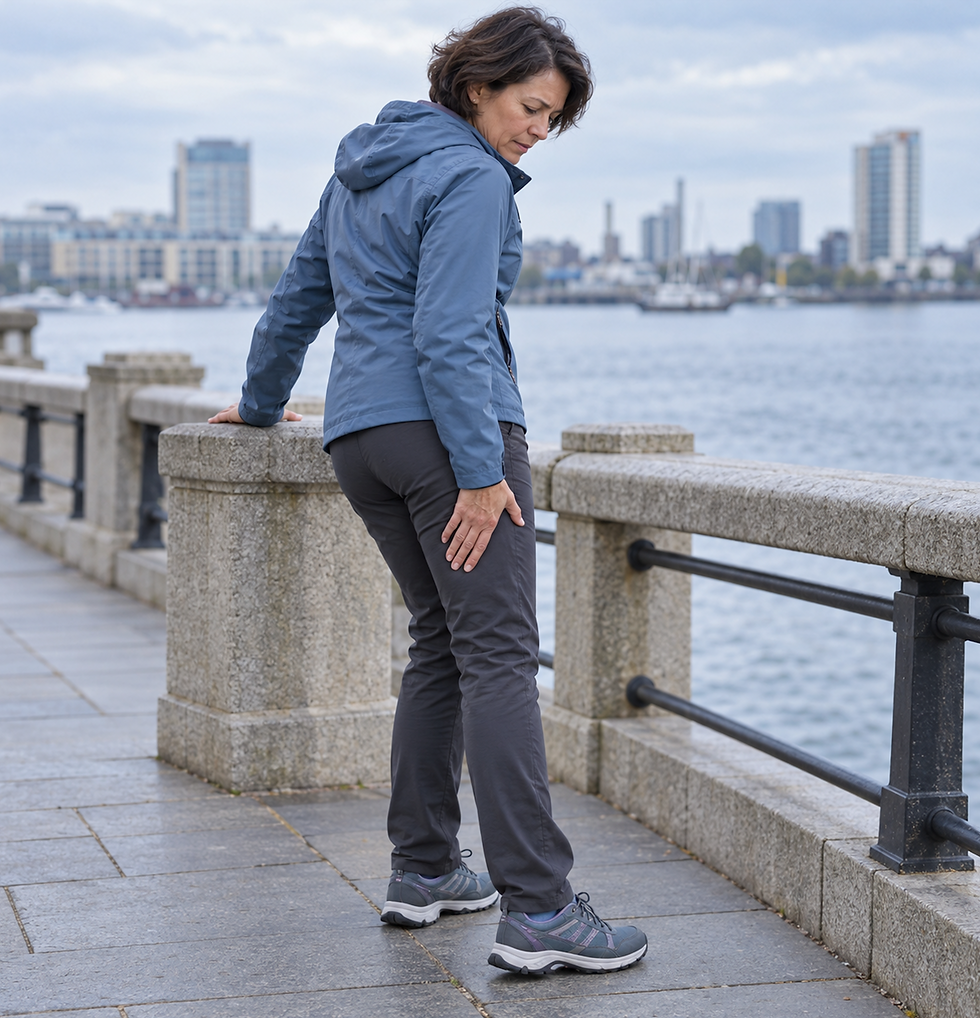
Sciatica: When Pain Travels Into the Leg
Leg pain can be more troubling than the back pain itself. It may burn, ache, or feel like an electric shock, sometimes accompanied by tingling or numbness. You may wonder whether the nerve is being damaged, particularly when symptoms reach the calf or foot.
Sciatica describes a symptom pattern, not a single diagnosis. It commonly arises from irritation of a nerve root in the lower spine, sometimes associated with disc herniation or narrowing around the nerve. Significant leg pain can occur with little back pain.
Pain and Nerve Function Are Different Questions
Radicular pain arises from an irritated spinal nerve root. Radiculopathy involves measurable impairment of nerve function, such as reduced strength, sensation, or reflex responses.
This distinction helps answer an important concern: severe pain does not, by itself, establish loss of nerve function. New or progressive weakness, however, can change the urgency of investigation.
Other Sources of Leg Pain
Pain referred from spinal, hip, or pelvic tissues can extend into the buttock or thigh without nerve-root dysfunction. Less commonly, the sciatic nerve is affected outside the spine, including within the deep gluteal region.
The examination helps distinguish these possibilities. Where pain travels is useful information; how sensation, strength, and symptoms change provides further direction.
Many people begin with nonsurgical care. New bladder or bowel dysfunction or numbness around the saddle region requires emergency assessment. These warning signs are explained later in the article.

Conditions That Can Cause or Overlap With Back Pain
You may recognize one of the following diagnoses from a previous appointment. Each describes a different problem, and some can coexist. Understanding the distinctions helps explain why similar symptoms do not always call for the same care.
Muscle Strains and Ligament Sprains
Unfamiliar activity, sudden movement, or increased physical demands can injure muscles, tendons, or ligaments. A strain affects muscle or tendon; a sprain affects a ligament. Local pain, tenderness, and protective muscle tightening may follow, although pain after activity does not necessarily establish a tissue injury.
Spinal Osteoarthritis
Osteoarthritis affects the facet joints, the small paired joints at the back of the spine. Changes in these joints may contribute to pain or stiffness. They are also common with age in people without symptoms, so a diagnosis of arthritis does not explain every episode of back pain.
Degenerative Disc Disease
This term describes changes in the discs between vertebrae, including reduced hydration or height. Despite the word disease, it does not predict inevitable disability. Disc changes may contribute to symptoms, but their importance depends on the clinical findings.
Lumbar Disc Herniation
A herniation occurs when disc material extends beyond its usual boundaries. It may irritate a nearby nerve root and produce sciatica. Treatment decisions consider nerve function, symptom progression, and daily limitations, rather than the size of the herniation alone.
Lumbar Spinal Stenosis
Narrowing around the spinal nerves may cause leg pain, heaviness, or numbness during standing or walking, often relieved by sitting or leaning forward. This pattern is called neurogenic claudication. Reduced circulation can also limit walking and needs consideration during assessment.
Sacroiliac Joint Pain
The sacroiliac (SI) joints connect the sacrum to the pelvis. Pain may occur near one side of the beltline and spread into the buttock, groin, or thigh. Lumbar and hip conditions can produce similar symptoms; pain here does not establish that the pelvis is displaced.
Piriformis Syndrome and Deep Gluteal Syndrome
The sciatic nerve can sometimes become irritated or entrapped in the deep buttock region. Piriformis syndrome is one possible form of deep gluteal syndrome. Pain during sitting or buttock tenderness may raise suspicion, but neither confirms the source.
Hip and Knee Osteoarthritis
Hip OA can produce groin, thigh, buttock, or knee pain and restrict movement. Knee OA may coexist with back pain and affect walking or exercise tolerance. These joints deserve examination when their symptoms or limitations influence the overall presentation.
Diffuse Idiopathic Skeletal Hyperostosis (DISH)
DISH involves extra bone formation along ligaments and tendon attachments, often in the spine. It may cause stiffness or fusion of spinal segments and requires specific treatment precautions. New pain after even minor trauma deserves particular attention.
A diagnosis helps guide care when it explains your symptoms and functional limitations. It is the starting point for informed decisions, rather than a prediction of what your life will become.
Why Pain May Persist or Return
When pain returns after relief, you may wonder whether treatment failed or another injury occurred. Sometimes the explanation needs reconsideration. Often, several influences deserve attention, including ongoing tissue irritation, daily demands, physical capacity, and pain sensitivity.
Relief and recovery do not always progress at the same pace. Bending more easily after treatment is valuable; managing repeated lifting or a full working day may require further adaptation.
Daily Demands and Physical Capacity
A weekend of gardening or a return to training can increase demands faster than your body adapts. Pain may also reduce activity, leaving you less prepared for tasks you previously managed.
For example, easier movement after treatment may not yet translate into several hours of gardening. That difference helps guide activity adjustments and rehabilitation progression.
Pain Sensitivity, Sleep, and Stress
Persistent pain may involve increased nervous-system sensitivity, although this should not be assumed from duration or intensity alone. Sleep disruption and stress can also influence symptoms: pain interrupts rest, fatigue makes activity harder, and concern about another flare may discourage movement.
These relationships deserve attention according to their relevance to you. They help explain why care may need to extend beyond the painful region.
Making Sense of a Flare
A recurrence does not automatically mean new damage or lost progress. Consider what changed and whether symptoms settle with reasonable adjustments. A new pattern, increasing leg symptoms, or weakness warrants reassessment.
Repeated brief relief also deserves review. The useful response is to reconsider the explanation and plan, using what has been learned to guide the next decision and help you regain greater independence in managing it.
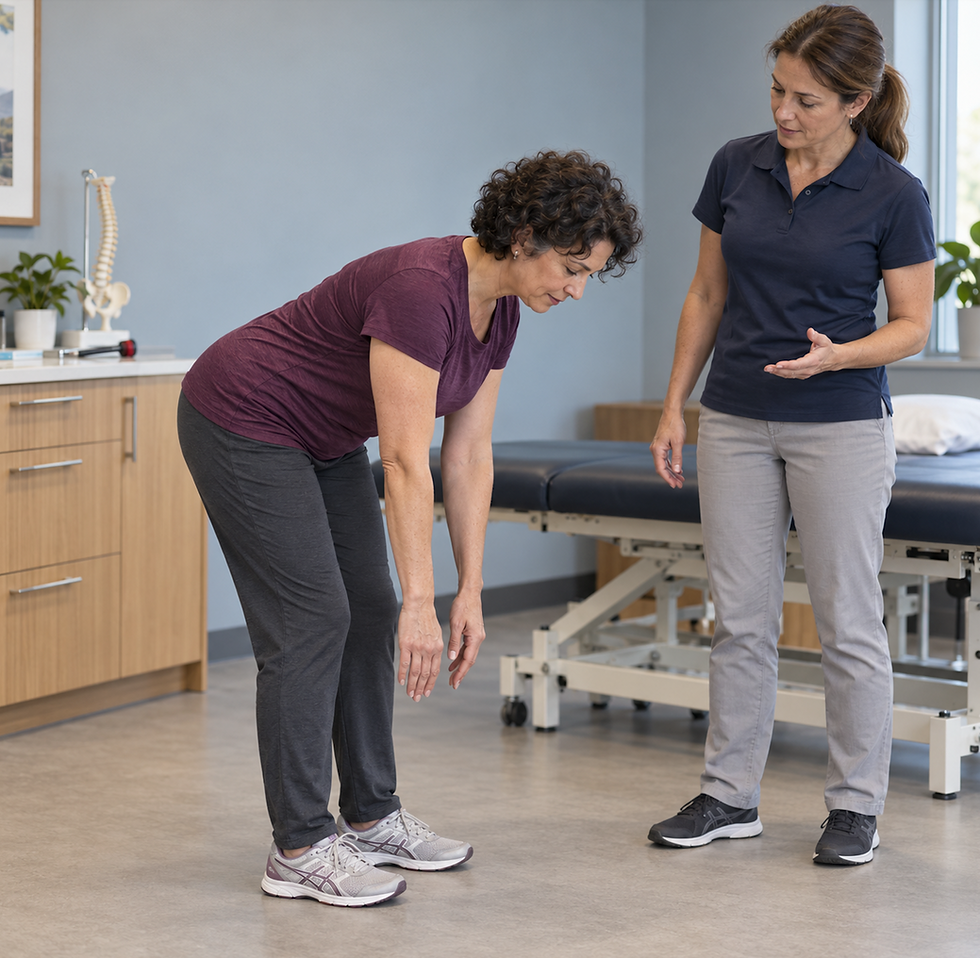
Assessment: Connecting Symptoms With Function
An assessment should help answer two questions: What best explains your symptoms, and what will help you regain the activities they have interrupted? Understanding both gives care a direction.
Your History and Priorities
We explore how symptoms began, what changes them, and what previous care has achieved. Injuries, medications, general health, and any changes in leg sensation, strength, or balance help guide the examination.
We also ask what you want to regain, why it matters to you, and what concerns you about movement. Walking farther might mean returning to a favourite trail, accompanying a partner, or managing daily errands independently. Your priorities help determine which improvements deserve the most attention.
Movement and Nerve Function
We examine how your lower back, hips, and pelvis move, assess strength, and observe relevant tasks such as bending, stepping, or rising from a chair. Reproducing your familiar symptoms can provide useful information when interpreted with the other findings.
When nerve involvement is suspected, we assess strength, sensation, and reflexes. Selected nerve-movement tests, walking assessment, or circulation testing may also be appropriate.
From Examination to a Practical Plan
We explain the most likely clinical picture, any remaining uncertainty, and the priorities for care. Together, we establish functional goals and an initial plan that may include treatment, home exercises, activity adjustments, or further investigation.
A baseline, such as walking distance or sitting tolerance, allows us to evaluate progress at an agreed reassessment point. You should understand what we are working toward and how we will judge whether the plan is helping.
When Imaging or Referral Can Help
An X-ray or MRI is useful when it answers a clinical question that could change your care. Many uncomplicated episodes of low back pain can be assessed initially without imaging. Investigation becomes more important when findings suggest a fracture, significant nerve compression, infection, or another condition requiring a different approach.
What the Findings Mean
X-rays primarily show bones; MRI provides greater detail about discs, nerve roots, and surrounding tissues. Ultrasound may help investigate selected soft-tissue concerns, but has a limited role in examining lumbar discs and nerve roots.
The importance of a finding depends on how it relates to your symptoms and examination. Disc changes may be incidental, while a finding that corresponds with progressive weakness may substantially change the next steps. Persistent symptoms can also justify imaging when the result would influence treatment or specialist planning.
Imaging Access at Kinetic Health
When clinically indicated, we can order X-rays and diagnostic ultrasound covered by Alberta Health Care for eligible patients and insured investigations. Our authorized access to Alberta Netcare allows us to review available radiology reports alongside the clinical findings.
We can also arrange private MRI investigations, paid for by the patient or covered by eligible private insurance according to the policy. When publicly funded MRI assessment is appropriate, we can coordinate with your physician or specialist.
Referral and Collaboration
Unexplained symptoms, changing neurological findings, or limited progress may warrant another professional perspective. Referral can clarify the diagnosis or expand treatment options, including surgical assessment when appropriate.
A consultation helps you understand those options and make an informed decision.
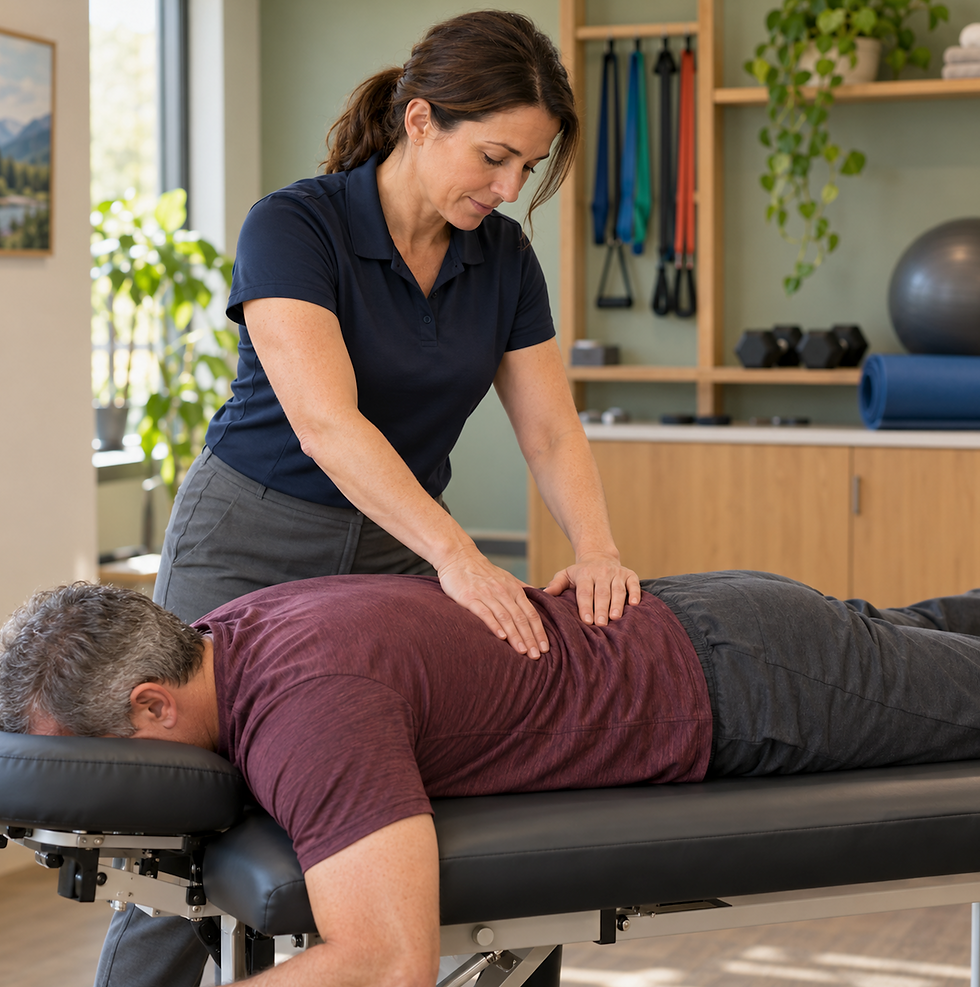
Treatment at Kinetic Health: An Integrated Approach
When pain interrupts something important, relief matters immediately. It also creates an opportunity to begin reclaiming that activity. We connect hands-on treatment with rehabilitation so that care addresses both how you feel now and the demands you want to meet again. Your goals give each component of treatment its purpose.
Selecting and Adapting Care
Motion Specific Release (MSR), developed by Dr. Brian Abelson, brings assessment, joint and soft-tissue procedures, neural mobilization, and rehabilitation into one adaptable framework. Its professional education programs teach more than 200 procedures. That breadth provides options; your findings and response guide their selection.
Soft-tissue care coordinates contact, positioning, pressure, and movement. Joint treatment may involve slower mobilization or a brief, controlled manipulation, with suitability determined by your health history, examination, and informed preferences. Neural mobilization may be considered for selected nerve-related presentations.
Our team also provides registered massage therapy and acupuncture. When acupuncture is combined with selected Traditional Chinese Medicine practices, we explain their purpose and how they fit into your care. Research findings and clinical recommendations for acupuncture vary. We discuss its potential benefits and limitations with you and review whether it is helping.
Supporting Rehabilitation and General Health
When relevant, nutritional guidance addresses your eating patterns, health, and rehabilitation needs. Dr. Abelson previously taught nutrition through the City of Calgary. More complex concerns may warrant collaboration with a dietitian or physician.
Building on Useful Changes
We review both the immediate response and what happens between appointments. Treatment can support function without reversing arthritis or disc degeneration, but relief alone does not establish how the effect occurred.
The plan develops as your abilities improve. Useful changes are connected with movement and progressive exercise; limited or repeatedly brief benefit prompts reconsideration of treatment or diagnosis.
Between appointments, shorter activities, lighter loads, or modified duties may help you stay involved while symptoms settle. These adjustments provide a bridge back to normal activity. Prolonged bed rest is generally discouraged.

Exercise and Rehabilitation: Rebuilding Capacity
Feeling better can make activity possible again. Rehabilitation helps you prepare for its demands. Carrying groceries, working, or lifting a child requires more than flexibility: it calls for strength, endurance, and coordinated movement.
Finding Your Starting Point
Your program begins with what you can currently manage. During a sensitive episode, this may mean shorter walks, supported movements, or lighter resistance. As tolerance develops, the challenge increases.
You do not necessarily need to be pain-free to begin. The important considerations are how symptoms respond and whether function is improving. Increasing leg pain, numbness, or weakness calls for reassessment.
Developing the Abilities You Need
Depending on your findings and goals, rehabilitation may include:
Mobility to address relevant spinal or hip movement limitations.
Strength and endurance for the trunk, hips, and legs.
Aerobic activity to build stamina through walking, cycling, or another suitable activity.
Functional practice with bending, lifting, carrying, and other meaningful tasks.
Balance and coordination when these affect participation.
Selected neural mobility exercises may be appropriate for nerve-related symptoms. They require instruction and should be performed as controlled movements rather than forceful stretches.
Making Progress Deliberate
An exercise name is only part of the prescription. Range, resistance, repetitions, frequency, and recovery determine the demand it places on you.
For example, lifting practice might begin with a light object at bench height, then progress toward heavier loads or lower starting positions. Your response guides the pace. Mild, temporary symptoms may be manageable; sustained aggravation or reduced function suggests an adjustment is needed.
The value of an exercise program becomes clearer when its gains reach something you care about. Greater endurance might let you finish a working day with energy for family; stronger legs might make a familiar walk possible again. As your abilities develop, the program should progress toward your priorities.
When to Seek Medical Attention
Seek emergency assessment for new difficulty passing urine or loss of bladder or bowel control, numbness around the genitals or anus, or rapidly developing or severe leg weakness. These symptoms can indicate serious nerve compression; you do not need to have all of them.
Significant trauma or sudden severe back pain with chest or abdominal pain, fainting, or severe illness also requires emergency assessment. Call 911 when needed.
Arrange prompt medical assessment for increasing weakness, worsening walking or balance, fever with back pain, or new unexplained pain with a cancer history. Pain after even a minor fall warrants particular attention when osteoporosis or DISH increases fracture risk.

Moving Forward
Progress becomes meaningful when it restores something you value: a longer walk, a working day with fewer interruptions, or picking up a child with renewed confidence. These moments reconnect treatment with the reason you sought help.
At Kinetic Health, our team combines complementary clinical skills with ongoing learning and Dr. Brian Abelson’s more than 30 years of musculoskeletal experience. Together, we work to understand your symptoms and develop care that responds to your needs.
Our shared purpose is to help you regain function and participate more fully in life. If you would like to explore your options, our team welcomes a conversation about an assessment.
References
Brinjikji W, Luetmer PH, Comstock B, et al. Systematic literature review of imaging features of spinal degeneration in asymptomatic populations. American Journal of Neuroradiology. 2015;36(4):811–816.
Bussières A, Cancelliere C, Ammendolia C, et al. Non-surgical interventions for lumbar spinal stenosis leading to neurogenic claudication: a clinical practice guideline. The Journal of Pain. 2021;22(9):1015–1039.
Cohen SP, Chen Y, Neufeld NJ. Sacroiliac joint pain: a comprehensive review of epidemiology, diagnosis and treatment. Expert Review of Neurotherapeutics. 2013;13(1):99–116.
Finan PH, Goodin BR, Smith MT. The association of sleep and pain: an update and a path forward. The Journal of Pain. 2013;14(12):1539–1552.
Finucane LM, Downie A, Mercer C, et al. International framework for red flags for potential serious spinal pathologies. Journal of Orthopaedic & Sports Physical Therapy. 2020;50(7):350–372.
Gellhorn AC, Katz JN, Suri P. Osteoarthritis of the spine: the facet joints. Nature Reviews Rheumatology. 2013;9(4):216–224.
Katz JN, Arant KR, Loeser RF. Diagnosis and treatment of hip and knee osteoarthritis: a review. JAMA. 2021;325(6):568–578.
Mader R, Verlaan JJ, Eshed I, et al. Diffuse idiopathic skeletal hyperostosis (DISH): where we are now and where to go next. RMD Open. 2017;3(1):e000472.
Martin HD, Reddy M, Gómez-Hoyos J. Deep gluteal syndrome. Journal of Hip Preservation Surgery. 2015;2(2):99–107.
Reinhold M, Knop C, Kneitz C, Disch A. Spine fractures in ankylosing diseases: recommendations of the Spine Section of the German Society for Orthopaedics and Trauma (DGOU). Global Spine Journal. 2018;8(2 Suppl):56S–68S.
Rizzo RRN, Cashin AG, Wand BM, et al. Non-pharmacological and non-surgical treatments for low back pain in adults: an overview of Cochrane reviews. Cochrane Database of Systematic Reviews. 2025;(3):CD014691.
World Health Organization. WHO guideline for non-surgical management of chronic primary low back pain in adults in primary and community care settings. Geneva: World Health Organization; 2023.
Medical Disclaimer
The information provided on the Kinetic Health website, including articles, videos, exercises, and other educational resources, is intended for general educational and informational purposes only. It is not a substitute for individualized assessment, diagnosis, or treatment by a qualified healthcare professional.
Musculoskeletal conditions and injuries vary from person to person. Exercises, self-care strategies, or other information presented on this website may not be appropriate for every individual or condition.
If you have new, severe, worsening, or unexplained symptoms, or are unsure whether an exercise or treatment approach is appropriate for you, consult an appropriately qualified healthcare professional.
Use of this website does not establish a practitioner-patient relationship with Kinetic Health or any of its healthcare providers.
For urgent or potentially serious symptoms, seek appropriate medical attention.


Comments